
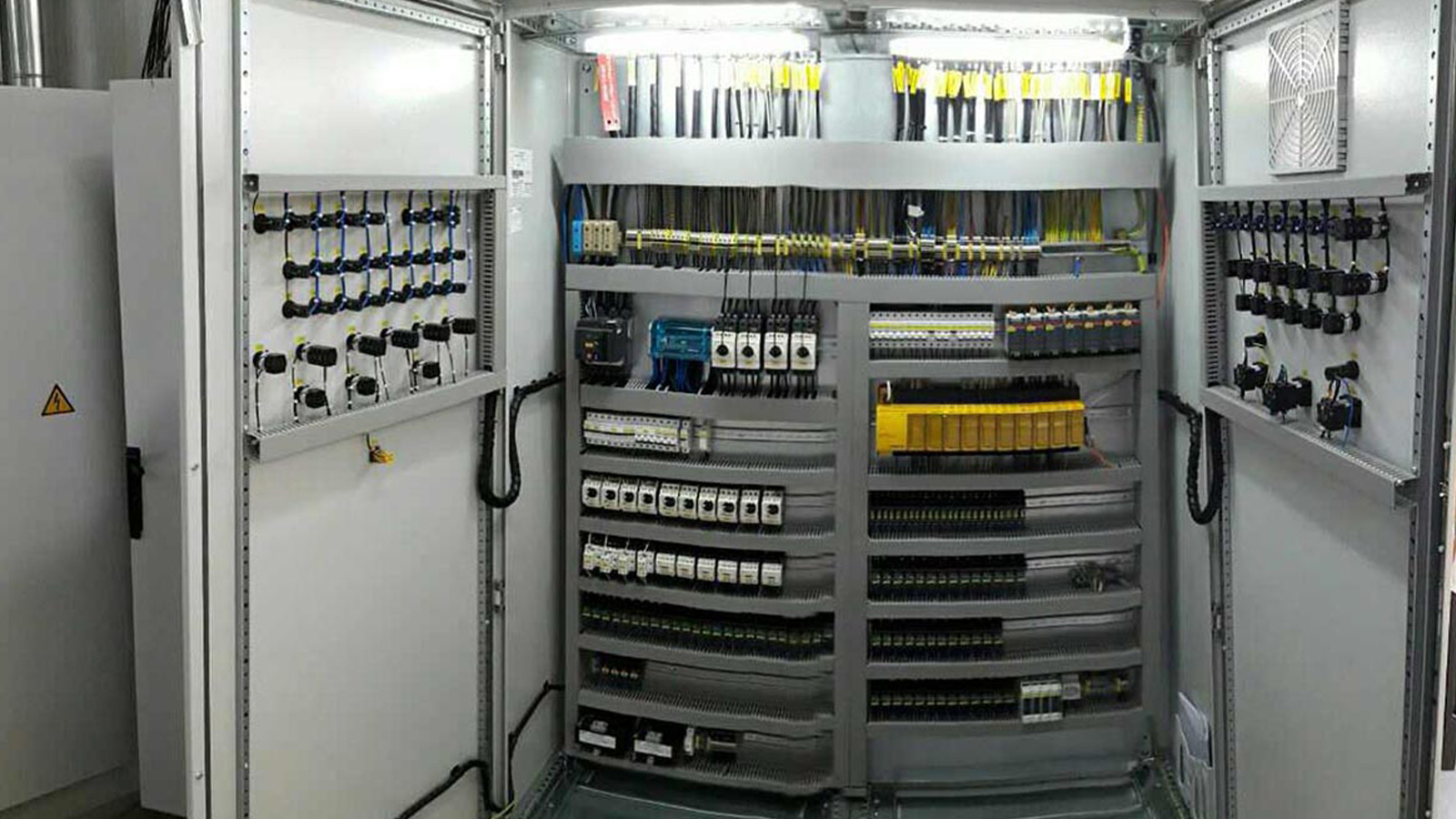
Electrical Cabinets
TYPE-TESTED SWITCHBOARDS
Low-voltage MCC switchgear assemblies are designed as type-tested withdrawable or fixed distribution boards, with a rated voltage of 0.69 kV, fully designed in accordance with the SRPS IEC/EN 61439-1 & 61439-2 standards.
Omega System manufactured by LOGSTRUP (Denmark).
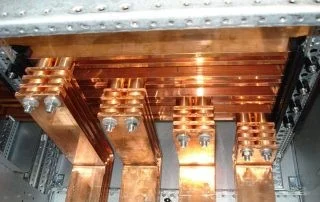
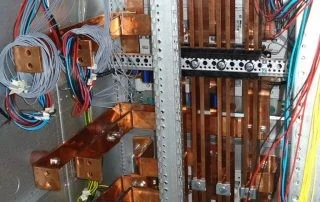
Type-Tested Switchboards
The modular MCC system is based on 190 mm modules in all directions, meaning that the dimensions of each section are an integer multiple of the basic module size.
Key Technical Features
- 190 mm Modularity: The entire system is based on a 190 mm module in all directions (x, y, and z axes). The dimensions of each section are integer multiples of this basic unit.
- High Electrical Ratings: Designed for rated voltages up to 0.69 kV and main busbar currents up to 8500 A.
- Unit Configurations: The Omega system supports fixed, removable, inline, and fully withdrawable cassette modules.
- Freedom of Component Selection: The system is brand-neutral, allowing the installation of low-voltage equipment and circuit breakers from leading global manufacturers such as Siemens, Schneider Electric, and ABB.
Main Operational Advantages
- Minimal Downtime: Withdrawable cassettes enable quick replacement or maintenance of modules without shutting down the entire installation.
- Live Reconfiguration: Rearrangement of layouts and replacement of smaller units with larger ones can be performed while the rest of the switchboard remains operational.
- High Packing Density: Up to 40 units (mini-cassettes) can be installed within a single vertical section.
- Communication Ready: Supports industrial communication protocols such as ProfiBus and DeviceNet for seamless SCADA integration.
- Maximum Safety: Features built-in Internal Arc Protection to safeguard personnel and equipment from arc fault incidents.
Type-Tested xEnergy, MODUL 2000 and MODUL 4000 Switchboards
Type-tested xEnergy low-voltage switchboards, developed by
Eaton, a global leader in power management, represent a modular system for main power distribution and Motor Control Center (MCC) applications intended for the most demanding industrial and commercial facilities.
The term “type-tested” (design-verified) means that the complete assembly has undergone rigorous factory testing and fully complies with international safety and technical standards IEC/EN 61439-1 and IEC/EN 61439-2.
Key Technical Features
- Rated Current: The system supports currents up to 6300 A, depending on the specific series.
- Modularity: A flexible structure enables easy expansion, configuration, and field extensions according to project requirements.
- High Safety Level: Internal segregation is available up to Form 4b, providing maximum protection against accidental contact with live parts.
- Arc Fault Protection: Assemblies are tested according to IEC/TR 61641 standards for passive and active protection against internal arc faults.
MODUL 2000 / MODUL 4000
MODUL 2000–4000 (commonly known as Modul 4000 TT) is a type-tested low-voltage switchboard system manufactured by
Schrack Technik.
It is designed for industrial plants, commercial and residential buildings, as well as hospitals where rated currents up to 5000 A are required.
Type Testing: The system is fully tested and certified in accordance with IEC/EN 61439-1 standards.
Modularity: A symmetrical and standardized design enables simple assembly, reduces installation time, and minimizes the number of required busbars.
High Protection Level: Internal segregation up to Form 4 ensures enhanced operator safety and reliable protection of equipment against unwanted faults and operational risks.
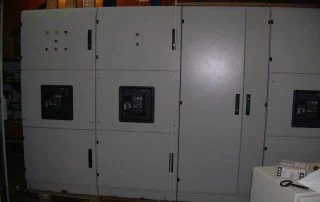
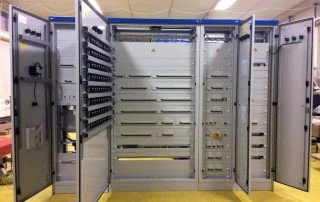
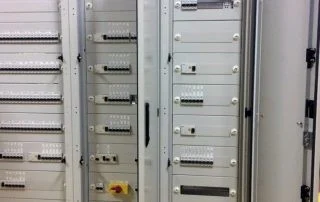
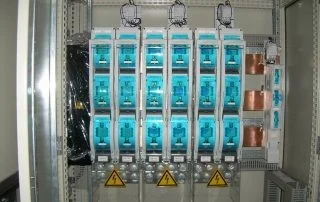
GENERAL POWER DISTRIBUTION ELECTRICAL CABINETS
General Power Distribution Cabinets (RO-OP) are designed for the safe distribution, measurement, and control of electrical energy in residential, commercial, and industrial facilities. They serve as the central point from which electricity is distributed to individual loads such as lighting, power outlets, heating, and air-conditioning systems.
Main Functions
- Power Distribution: Reception of the main supply cable and distribution of power to individual electrical circuits.
- Installation Protection: Circuit breakers protect installations against overloads and short circuits.
- Personnel Protection: Residual Current Devices (RCD/FI switches) protect against electric shock by monitoring leakage currents.
- Consumption Management: Integration of timers, contactors, and relays for automated operation of electrical equipment.
Construction and Materials
- Metal Cabinets: Manufactured from pickled or cold-rolled steel sheet and protected with powder coating.
- Polyester Cabinets: Resistant to UV radiation, corrosion, and weather conditions, making them ideal for outdoor installation.
- Plastic Cabinets: Primarily used indoors for a smaller number of modular devices.
- Protection Rating: Typically ranging from IP40 (for dry indoor environments) to IP65 (for humid and outdoor conditions).
Typical Equipment Installed in the Cabinet
- Main Switch: Enables disconnection of the power supply to the entire facility or a specific installation section.
- Busbars: Copper bars used for the distribution of phase conductors, neutral, and grounding lines.
- Modular Equipment: Circuit breakers, surge protection devices, and indicator lamps.
- Cable Glands: Ensure proper sealing at cable entry points into the enclosure.
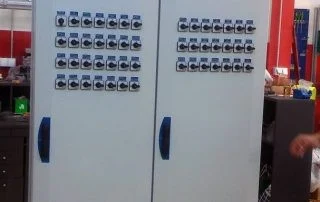
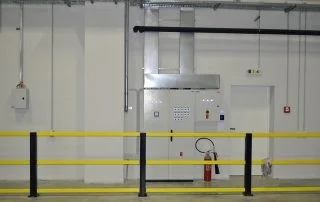
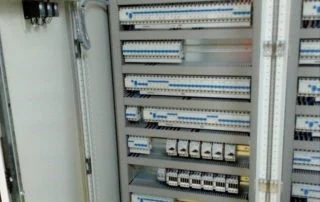
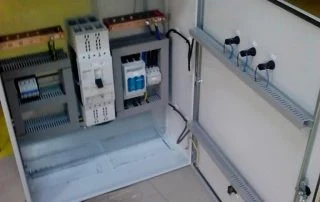
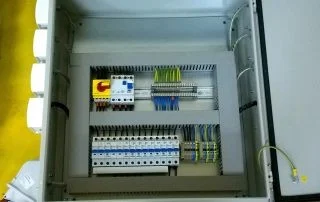
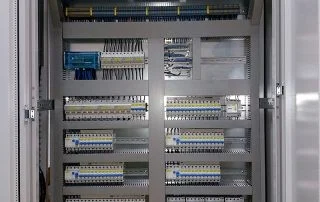
ELECTRICAL AUTOMATION AND MOTOR CONTROL CABINETS
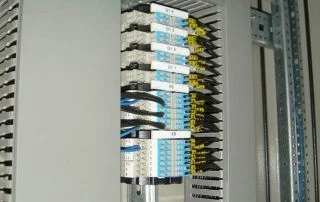
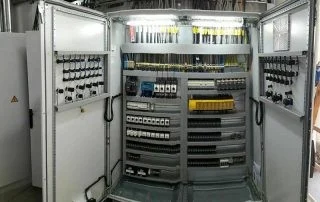
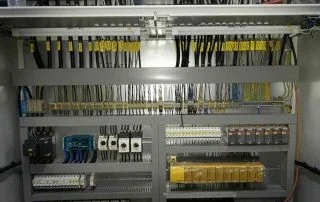
Electrical automation and motor control cabinets are central systems used for the monitoring, regulation, and control of industrial machinery, plants, and building systems. These cabinets integrate PLCs (Programmable Logic Controllers), variable frequency drives (VFDs), switching devices, and measuring instruments, enabling fully automated system operation.
Types and Applications
- Industrial Automation: Control of production lines, manufacturing equipment, and industrial machinery.
- HVAC Systems: Automation of heating, ventilation, and air-conditioning systems.
- Process Industry: Control of pumps, valves, and dosing systems in industrial processes.
- Generator Systems: Cabinets equipped with ATS (Automatic Transfer Switch) modules for diesel generators and power transfer applications.
Components and Equipment
- PLC Controllers: Commonly supplied by leading brands such as Siemens, Schneider Electric, and Johnson Controls for advanced automation logic.
- Relays and Contactors: Used for galvanic isolation and power switching functions.
- Variable Frequency Drives (VFDs): Provide precise speed control of electric motors.
- Communication Modules: Enable remote monitoring through SCADA systems and seamless integration into larger automation networks.
REACTIVE POWER COMPENSATION CABINETS
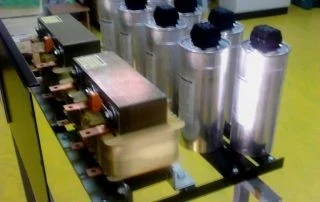
Reactive power compensation cabinets are designed to automatically regulate the phase relationship between voltage and current. By installing these cabinets, network losses are reduced, voltage levels are stabilized, and costly penalties imposed by electricity distributors for excessive reactive power consumption are eliminated.
Main Components of the Cabinet
- Capacitor Banks: The primary source of reactive power compensation.
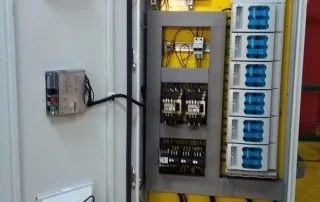
- Controllers (Relays): The control unit of the system, continuously monitoring network conditions and switching capacitor stages on or off as required.
- Capacitor Contactors / Thyristors: Electrical switching devices used to control capacitor banks. Thyristor-based (dynamic) switches are used for applications with rapidly changing loads.
- Fuses and Protection Devices: Provide protection against short circuits, overloads, and overvoltage conditions.
Types of Compensation Systems
- Individual Compensation: Connected directly to individual motors or large electrical loads.
- Group Compensation: Used to compensate an entire group of machines or a specific production area.
- Central Compensation: The most common solution, where the cabinet is installed at the main distribution board and regulates the total reactive power consumption of the facility.
TESTING OF ELECTRICAL CABINETS
Testing of electrical cabinets is a legal and technical requirement that ensures facility safety, prevents fire hazards, and guarantees the stability of the electrical network. Inspections and testing are carried out by licensed professionals and specialized companies using calibrated measuring instruments, in accordance with applicable technical regulations and standards such as SRPS HD 60364.
Electrical cabinet testing includes the following procedures:
1. Visual Inspection
Before any electrical measurements are performed, a detailed visual inspection of the cabinet is carried out:
- Identification and Documentation: Verification of single-line diagrams, equipment labels, and conductor markings.
- Mechanical Condition: Inspection of enclosure integrity, IP protection rating, and cabinet doors.
- Equipment Selection: Verification that installed components (fuses, switches, conductors) are suitable for the intended load and application.
- Connection Quality: Visual inspection of the tightness and condition of busbar and terminal connections.
2. Electrical Measurements and Testing
This phase includes precise testing using measuring instruments on energized or de-energized installations:
- Protective Conductor Continuity Test: Confirms a reliable connection between exposed conductive parts and the grounding system.
- Insulation Resistance Measurement: Verifies insulation quality between active conductors and earth to detect cable damage or deterioration.
- Protective Device Testing (RCD/FI Devices): Verification of trip current and response time of residual current devices that protect personnel from electric shock.
- Fault Loop Impedance Measurement: Ensures that protective devices will disconnect the circuit quickly enough in the event of a short circuit.
- Leakage Current Measurement: Detection of unwanted currents flowing to earth.
3. Thermographic Inspection
Thermal imaging inspection is a modern and highly effective diagnostic method performed while the cabinet is under load.
- Detection of Hot Spots: Infrared cameras identify loose connections, overloaded protective devices, and overheating cables.
- Fire Prevention: Most electrical fires originate from poor connections inside switchboards, which can be detected through thermography before a failure occurs.
4. Functional Testing
- Testing of automatic control systems, PLC and DCS controllers (where installed in control cabinets).
- Verification of signaling devices, indicator lights, emergency stop buttons, and secondary control circuits.
5. Test Results: Inspection Report (Certificate)
Upon completion of the inspection and testing process, the authorized professional or company issues an Electrical Inspection Report (Technical Report / Compliance Certificate).
This document contains:
- Information about the facility and the tested electrical cabinet.
- Tables containing measured values and applicable limits.
- A conclusion stating whether the electrical cabinet COMPLIES with the prescribed safety requirements.
- The validity period and due date for the next periodic inspection.